

Repair or buy new? The 50% rule
Kevin Muñoz · 9 July 2026 · 5 min read
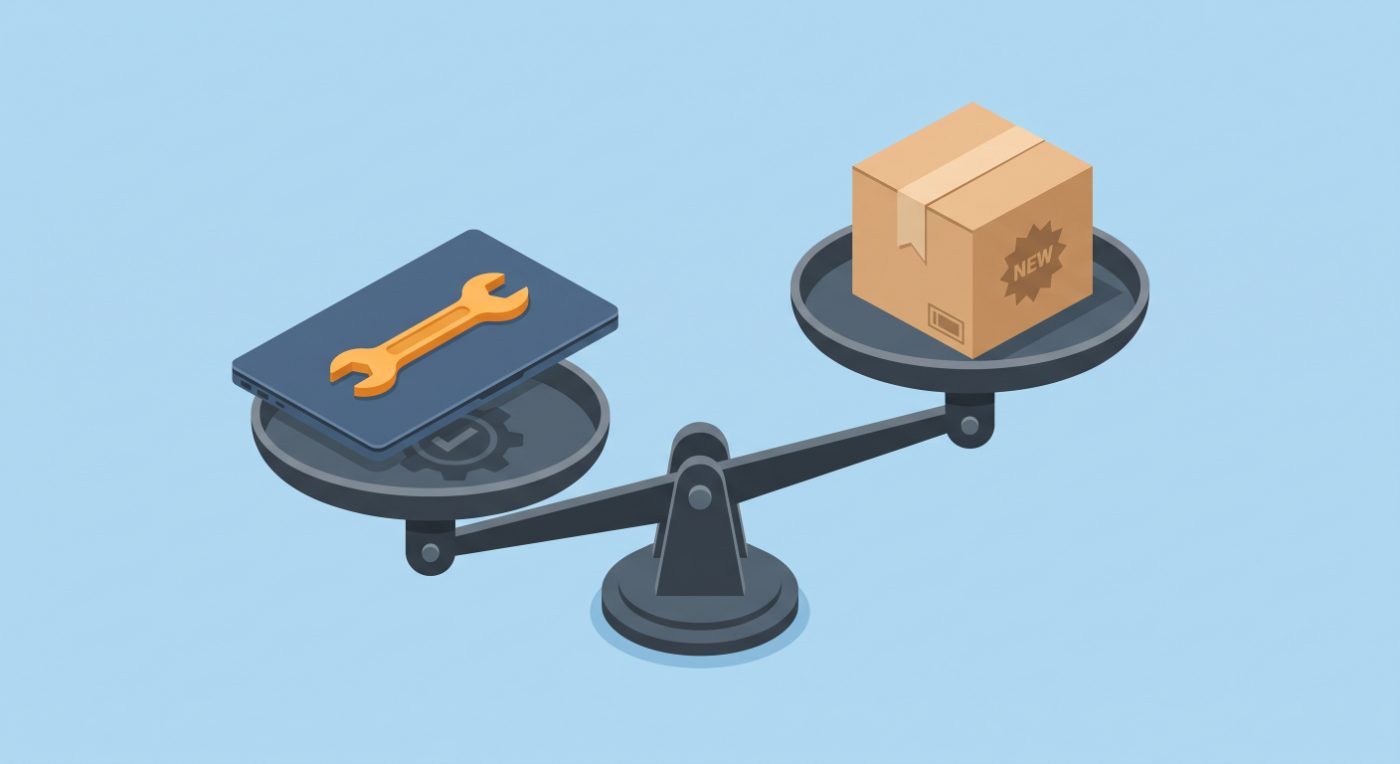
It's the question I'm asked most and the one where the most money is saved or lost. I make a living from repairs, so I could always push you towards repairing. I don't: when it's not worth it, I say so. This is the rule I use.
If the repair costs more than half of what an equivalent second-hand device is worth today, it stops being a good investment.
How it works, with numbers
The reference value isn't what you paid, but what the same device costs second-hand today. Look it up on Wallapop or in shops selling refurbished devices and go with the average price, not the highest.
The detail that changes the outcome
The rule measures money, but what you're really buying is years of use. Divide the cost by the years you expect to gain:
- An upgrade (SSD, more RAM, a new battery) rejuvenates the device and usually gives three or four years. Even with 2026's expensive memory, it's the best value per year of life gained.
- A repair after a breakage (screen, connector) puts the device back where it was, without adding life. It costs more per year.
- A repair on a device with several ailments is usually the first of three payments. That's where to stop.
When to repair even if the numbers don't add up
- There's data inside with no backup. Photos, contacts, work documents. Repair is almost always the cheapest way to get them back.
- It's a single fault in a healthy device. A keyboard or a hinge on an otherwise perfect laptop.
- You need the device tomorrow. Repairing today is quicker than choosing, buying and migrating everything.
When not to repair, even if the price looks good
- The system no longer gets security updates. An unpatched phone is a risk if you use it for online banking.
- The motherboard has been damaged by liquid or a hard knock. It can be attempted, but with no guarantees and often for the price of another device.
- It's the third different fault in a year. The device is warning you.
- It no longer meets your needs, even if it works. If it's no longer powerful enough for you, fixing it won't solve your problem.
When repairing isn't worth it, the sensible option is rarely buying brand new. A refurbished device with a warranty costs half as much and performs just as well. I'll tell you what to look for and check what you're about to buy before you pay.
Frequently asked questions
And what I paid back then doesn't count?
No. That money is already spent whatever you decide. The only useful figure is what it's worth today.
How much do you charge to tell me which case I'm in?
Nothing. Diagnosis is free and, if my advice is not to fix it, I don't charge you for that either.
What do I do with the old device?
If it has usable parts, I can find a use for them. If not, take it to the recycling centre: never in the normal bin.
I'll tell you if it's worth it, even if the answer is no
Tell me what device it is, what's wrong and how old it is. I'll give you my honest opinion and a fixed price if there's something to be done.